Wednesday, May 30, 2018

Train the Next Generation to Write by Inspiring Them to Read

nullIf  you want to cultivate the next generation of writers, and ensure that writing remains a viable art and career path for the next several generations, then you've got to promote reading. Without reading, there is no writing.

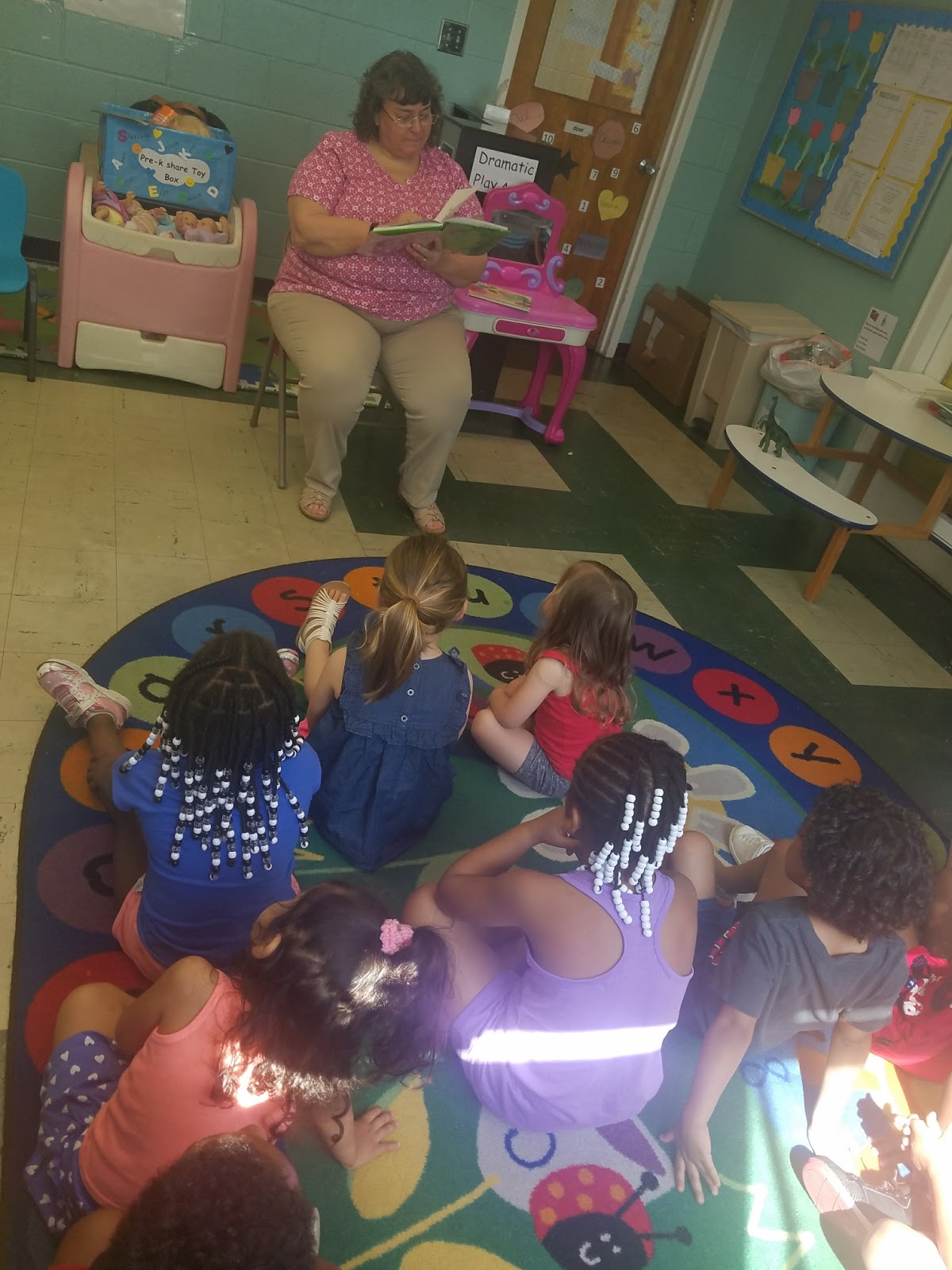
I had the honor and the pleasure recently of being a guest reader at the daycare center in my church. I really enjoyed doing it and look forward to doing it again.

I read The Giving Tree, which came to me highly recommended but turned out to be a little too long for their attention span. Also, the pages were black and white, and the kids really seek out color. So while the story was good, their attention wandered, even though I used my hands and demonstrated the book as I went along.

The second book I read was a big hit. It was called 10 Little Ladybugs. It was a countdown book for which they enjoyed participating. The colors were rich, and there were pop-up ladybugs peeking through from the second page through holes in the front cover, so after the reading I passed around the book and they all got to touch the ladybugs, which they really enjoyed.

All daycare centers welcome guest readers for their 3- and 4 year-olds, so if you have the time and the interest, consider volunteering. Your local library also does book reading in the children's department.

I recommend that all writers take some time to read to the next generation. You could be the fuel that lights the fire inside the next great writer. 


Happy reading and writing!

If you like a good book that keeps you on your toes and surprises you at every turn, please check out my novel, In Fashion's Web on Amazon. It's got 10 5-star reviews!

Tuesday, March 6, 2018

Going from ‘Inspired’ to ‘Hired’


One of the hardest things for me in the early days of my writing and editing career was being able to turn creativity on and off within the 9-5 workday. Before getting a job that required me to write, I had only written when I felt inspired. As a teenager, I lived within walking distance of a beautiful beach and I used to go down there during the summer with a notebook and pen and sit on the rocks. It was easy to get inspired looking at Long Island Sound, feeling the sun on my back and listening to the sound of the waves crashing and the seagulls cawing.

But when I got a job that required me to start writing at any time of the day, in between meetings and answering the phone, it was hard at first. But after a few failed attempts, I realized that as long as I have something to write about I can write anytime, anywhere. After that, it became easy to turn it on at 9 a.m. and turn it off at 5 p.m. All I needed was enough material. And with several categories of industry I was responsible for, I certainly had enough material.

Today, I have no problem being inspired to write. It doesn’t matter where I am, what time it is, who I’m with or who’s missing. There’s always something I want to say and I find myself coming up with blog ideas all the time and writing them down in emails or on pieces of paper. 

If you struggle with being inspired, look around you. What interests you or upsets you? What great childhood memories do you have that something reminded you of as you were driving or walking by it? Did you experience a good Samaritan recently and you want to share the story? Or is it simply the daily news you are interested in? Perhaps an opinion on politics or a profile of a family in your local town who lost their home to a fire?

The truth is, inspiration is all around you if you just look for it. I recommend you keep a pen and paper with you at all times. Or use the 'note' or 'recorder' function of your cell phone to capture ideas throughout the day. Then in the evening, sit down and go through your ideas. Find one that you think you can cultivate and start writing. 

You may decide just to keep these works for yourself. But maybe you've written something that you think is publish-worthy. Does it fit your local newspaper's requirements? Or perhaps you want to start your own blog. They're really easy. (I started this blog just by going to blogger.com.) You might even some day pull together into a short book. 

But even if you don't publish, that shouldn't stop you from writing. If you are a writer by nature, then always write. It doesn't matter where or when, just keep the wheels turning and the juices flowing. You'll be surprised how easy it will become to turn it on and off whenever you need to. 

Happy writing!

Please check out my novel, In Fashion's Web on Amazon.


Saturday, September 9, 2017

Reading John Irving Takes Perseverance and Patience, but in the End it's Worth It

When I start reading something from an author, I generally like to stick to that author and both collect and read all his or her works, or at least a majority of them.

Last year, I decided to introduce myself to the works of John Irving. The first book I picked up, The Water-Method Man, was probably not a good choice to start with. The beginning got off to a slow start, with lots of minutiae-like details. The book begins with the discussion of a problem the main character has with his penis. His penis ends up being a pretty central theme to the book.

The first 80 pages or so seemed, to me, almost clinical in their boredom, but I kept with it, because once I start a book I like to finish it. Well, the book picked up in both the pace and the subject matter, and I really enjoyed the last one-third of the book.

Next, I picked up A Widow for a Year. This book I liked right away. The language was more conversational and moved at an enjoyable pace. I particularly liked the use of the family photographs in the story. Family photographs are a main theme in this book and the way they are introduced at the beginning and continually weaved throughout the novel are nicely done. There's a balance and almost a poetry to them.

I just finished reading Cider House Rules. Like Water Method Man, this book is tedious in the beginning. There is a lot of discussion of medical procedures, particularly as they pertain to the female genitals.

The main character is geeky and a loner and lives for tiny details. However, this book enthralled me. When I first started reading it, I told a friend who said, "Oh that book is so sad." I thought, "great. I'm voluntarily going to make myself miserable." But in hindsight, I don't think 'sad' was the right way to describe it. Solemn, maybe.

But definitely enthralling. The deeper I got into the book, the deeper I wanted to go. In fact, deep is a good descriptor for this book. The main character, Dr. Wilbur Larch, was very deep in the way he questions life and everything in it. By the time I got to the last 120-plus pages, I no longer felt like I was reading. I felt like I was watching the movie unfold before me. I literally saw those last 120 or so pages with my eyes.

The bottom line is, Cider House Rules is intense. The intensity builds, and I very much enjoyed it.

I am now reading A Prayer for Owen Meany. I'm only on page 8 and I'm finding it very tedious. But then I turn to the back cover, where Stephen King writes "Extraordinary... original... enriching... and a rare creation. Readers will come to the end feeling sorry to leave this richly textured and carefully wrought world." How could I not go on after that?

I know, with complete confidence that I will read page 9, and 109, 209, 309, 409, 509 and all 617 pages of this book.

Waiting for me on my bookshelf is The Hotel New Hampshire. It's the last one I own, for now. If Owen Meany is anything like Cider House Rules and Hotel New Hampshire is anything like Owen Meany, there will be more books up there before long.

If you're an avid fiction reader and you like to read almost anything you can get your hands on, even you would need perseverance and patience to get through the first half of any John Irving book. But in the end, they all will be worth it.

Please check out my novel, In Fashion's Web on Amazon.


Friday, July 7, 2017

Why Hillary Clinton and I Look up to Nancy Drew

A few days ago I caught Hillary Clinton on C-SPAN's BookTV cable network. Mrs. Clinton was there to promote her book, which is coming out in September.

On a sidenote, the interviewer was Cheryl Strayed -- a fellow author I admire.

At some point in the conversation, Cheryl asked Hillary about childhood books that shaped her. She immediately referred to Nancy Drew. "I read every single book in the series," she said.

I also read every book in the series. My sister received them in the mail, and as soon as she finished reading them, I couldn't get my hands on them fast enough.

But what struck me in kind of a light-bulb-over-my-head fashion was what Hillary remembered about why she admired Nancy Drew and how I could immediately relate to it.

"She was strong and independent," the former first lady and secretary of state said. "She had lost her mother, she had a full-time job, she went to school and she solved crimes."

And I thought, "yeah, strong and independent." I had forgotten all about her, but next to my mom, Nancy Drew was probably one of my early role models. Nobody ever said to Nancy Drew, you can't do that because you're a woman. And I was able to relate to that even at an early age. She was also the quintessential multitasker, and I definitely take after her in that role.

Now, I'm on the other end of the book -- the writing end. And even though I didn't know when I was reading Nancy Drew that I wanted to be a writer, I definitely feel that her strong character played a role in shaping the female characters in my book.

Thanks, Mrs. Clinton, for reminding me about what a great role model Nancy Drew was!

Hillary's new memoir will be out September 26th. I can't wait!

Please check out my novel, In Fashion's Web on Amazon.
Saturday, May 27, 2017

An Open Letter to Reese Witherspoon

Dear Ms. Witherspoon,

A few months ago, you were featured on one of those entertainment media TV shows such as The Insider, or Entertainment Tonight. It was the 20th anniversary of your career. Congratulations, by the way.

At one point, you were explaining to the interviewer how you got into the film production business. You said that you were having trouble finding a role that fit you at that particular point in your life in and your career. You said that you read the book, Wild by Cheryl Strayed and that you felt such a connection to the role that you bought the movie rights and you produced it. And now you have a production company and you make films.

Then, you turned directly into the camera and you said to the viewing audience, "So send me your books." Those were your exact words. I'm not making this up.

So I sent you my book. And imagine my surprise when I received it back, unopened, marked "Refused" on the front.

I took a lot of time to craft a query letter that had all the information I felt you needed to make a decision about whether to read the book or not, and I left out the fluff. I spoke about the 5-star reviews I have on Amazon and the testimonials that people have written. I tried to keep it tight and to the point so as not to waste your time. You are, after all, a very busy woman.

Now I know that movie production houses don't accept unsolicited books. I've search them on the Internet and they all say the same thing: that I need to be represented by a literary agent. However, you asked for my book. You told me to send it, so I thought, at the very least, you would open the package, read the letter, and review my book. At least if you did that and you turned it down, I would feel like I had had a fair shot.

Ms. Witherspoon, you are one of my favorite actresses. I loved you in Legally Blondes 1 and 2, I loved you in Sweet Home Alabama and Walk the Line. And I really loved you in Wild. But I feel, in this case, since you point blank asked for books, that you're not being fair.

I respectfully request that you at least look at my book, In Fashion's Web. I do think it would make a good Hallmark or Lifetime-style movie. Of course, everyone probably says that.

But under the circumstances, since you invited me to send my book, I would appreciate it if you would at least give it a chance.

Thank you for listening.
Lynn


Friday, May 26, 2017

Even with Fiction, it's Good to Teach Readers Something They Don't Already Know

I'm currently reading Message in a Bottle by Nicholas Sparks. I'm about a third of the way through the book, and there's a scene in which a man, Garrett, and a woman, Theresa, are having a conversation. In that conversation, Garrett starts telling a story about the Phoenicians and how, in 600 B.C., they sailed around the entire continent of Africa guided primarily by the North Star. He says they were the first people to do so, but no one believed them, and that they were finally proven right about 2,000 years later.

Theresa and Garrett are in a sailboat when they have this conversation, and Garrett is pointing out the stars, so it is a smooth transition when he starts giving Theresa the history lesson.

The thing is, after I finished reading those few paragraphs, I really enjoyed the fact that I had learned something. And I realized that even as fiction writers, we must teach our readers something they don't already know.

In my book, In Fashion's Web, for example, I have a character who is training as an Olympic ice skater, and during her events and her practices, I describe many skating moves. I also describe the streets of Paris and Milan in some places because some of the scenes take place there.

I think that readers get satisfaction out of these factual tidbits, so it's important to have some areas in your book in which you feel you can impart some wisdom or knowledge. It can be a town, city or neighborhood -- perhaps the place where you grew up. Perhaps your characters are dancing a certain or your soldiers are conducting war-time maneuvers.

Of course, like the Nicholas Sparks example, inserting reality into fiction has to be smoothly done and it has to fit well within your story line.

You can also learn something, and then write about it. For instance, I didn't know anything about the streets of Paris or Milan. I had to research them.

So give this idea some thought as you're writing. What is that you know, that you're good at, that maybe you can breathe into the life of one of your characters?

Happy writing!

Please check out my novel, In Fashion's Web on Amazon.

Sunday, May 21, 2017

"Girl on the Train" Author Knows How to Keep the Reader in Suspence

There will be NO spoiler alerts in this blog post, so if you haven't read the book or seen the movie, go ahead, read on!

If you're looking for help in figuring out how to build suspense in your book, I suggest you pick up "The Girl on a Train" by Paula Hawkins.

Perhaps the ominous TV trailer ads were what sets up the suspense. And I can't be sure that I would have felt exactly the same way had I simply read a book description and started reading.

But regardless, this book offers an excellent lesson in how to keep readers in suspense.

What I like best about it is that my anxiety that something was going to happen started with page 1 and kept going -- and building -- throughout the entire book.

But I had no idea what that 'something' was. I mean, I had an assumption, because the movie trailor set me up for that. But I didn't know who, I didn't know how, I didn't know when, and I didn't know why. And the book doesn't reveal any of that until the last quarter of the book, so I was really on the edge of my seat the whole way through.

"Not" revealing everything, I think, is one of the hardest things to do when I'm writing, because, as an author, I have to "think from the end." So I always know, mostly know anyway, how one of my books is going to finish before I commit even one typed character to computer.

For example, with my second book, a story of self-discovery about a woman who hits rock bottom and rebuilds herself to a future of happiness, I wrote the entire book in my head over a period of several months before I even knew it was going to be a book.

Did Paula Hawkins have Girl on a Train completely figured out before she started writing? Did she know who, what when, where, how and why before she committed one character to digital paper? I don't know the answer, but I do know that not every author works that way. Some prefer to "start" and just let the "flow" take them. That happens for me with conversation threads, but not with the direction of the book.

How does it work for you?

In any case, I highly recommend that fiction writers read The Girl on the Train. It's an excellent primer for fostering ideas on how to build suspense in your own book.

Happy writing (and reading) !

If you like suspense, please check out my novel, In Fashion's Web on Amazon.